Insurance rates are climbing fast, with car premiums up over 20% in just a year. Rising repair costs, extreme weather, auto theft, and litigation are driving these increases. But you can still cut costs without losing coverage. Here are five effective ways to lower your premiums:
These strategies help you save money while keeping the protection you need. Start by comparing quotes or reviewing your current policy for potential changes.
Shopping around for insurance quotes isn’t just a good idea - it’s a must if you want to save money. With premiums continuing to rise for many in the U.S., comparing providers is the first step toward finding a policy that fits both your budget and your needs.
Not all insurance policies are created equal. Even when coverage seems identical, there can be differences in exclusions, limitations, and add-ons that impact your premium and overall protection. For instance, one insurer might include better water damage protection, while another could offer more robust roadside assistance.
How insurers calculate premiums also varies. Some focus heavily on your credit score, while others might prioritize your driving history or the safety features in your home. Because of this, two people with similar profiles could receive vastly different quotes for the same level of coverage. Keep in mind that a lower premium might mean higher deductibles or fewer benefits, which could leave you paying more out of pocket when you need to file a claim. Comparing policies allows you to strike the right balance between affordability and adequate coverage, while also helping you identify any gaps before it’s too late.
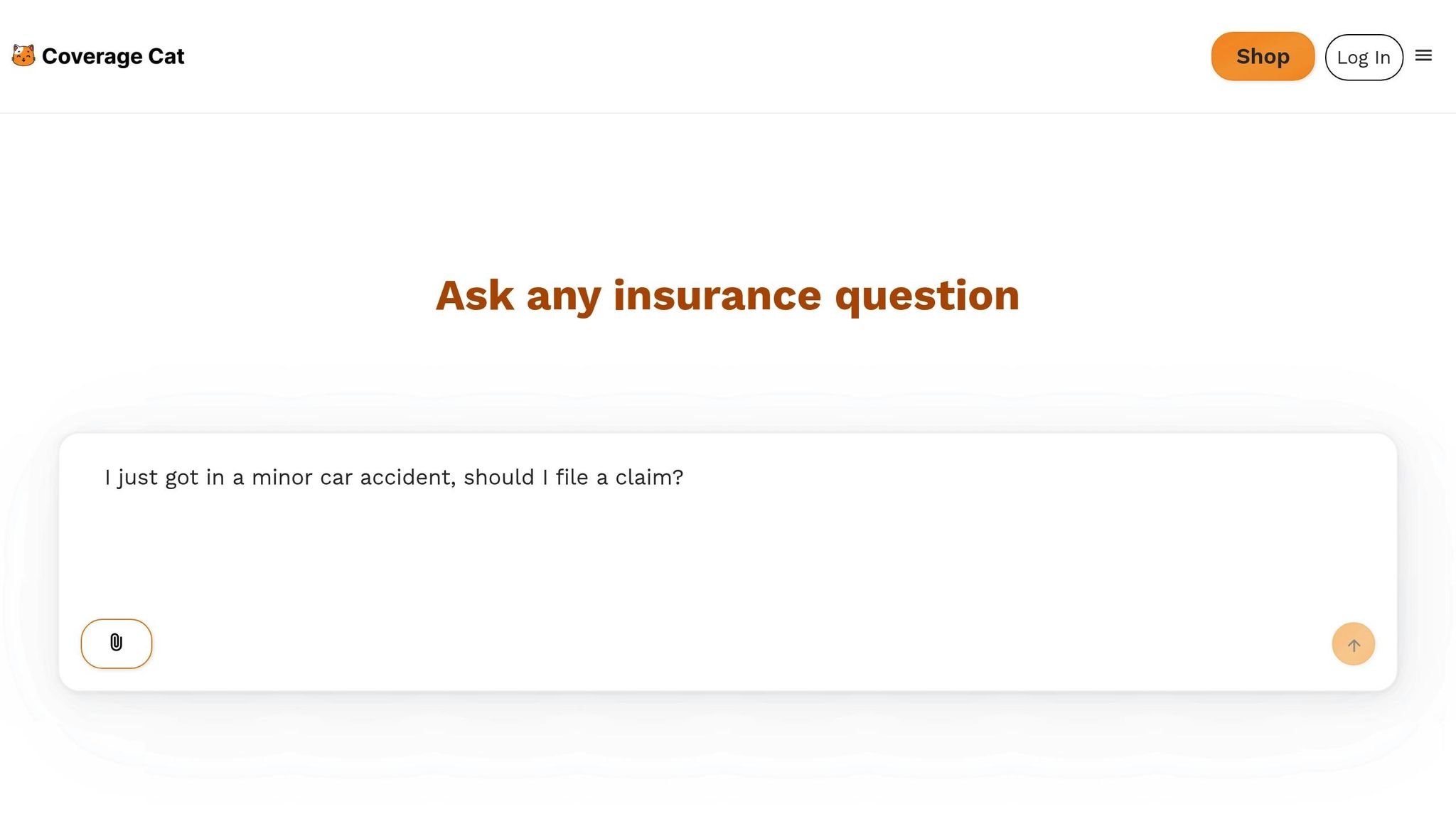
In the past, getting multiple quotes could be a hassle - filling out endless forms or making call after call. Coverage Cat changes the game by letting you enter your information just once to receive competitive quotes from several providers.
The platform caters to a range of insurance needs, including auto, home, and umbrella policies. Its user-friendly interface makes it simple to upload documents and get personalized recommendations. Plus, by checking out customer reviews and claims processing ratings, you can get a clearer picture of each insurer’s reliability and service quality.
Taking the time to compare quotes can lead to noticeable savings. Just make sure the coverages, limits, and deductibles are consistent across all quotes to make an accurate comparison. And remember, the cheapest policy isn’t always the smartest choice if it sacrifices benefits or comes with subpar customer service. Over time, the effort you put into comparing options can pay off in both savings and peace of mind.
Bundling your insurance policies with a single provider can shrink your premiums by combining coverage and unlocking multi-line discounts. Let’s break down how bundling works and how it can lead to meaningful savings.
Policy bundling is when you purchase multiple types of insurance - like auto, home, or specialty coverage - from the same company. This approach often comes with discounts ranging from 5% to 30%. For example, State Farm offers up to a 25% discount when you combine car and homeowners insurance. Similarly, Liberty Mutual reports that new customers switching to bundled home and auto policies save over $950 annually.
Now that we’ve covered the basics, let’s see how Coverage Cat helps you take advantage of bundling opportunities.
Coverage Cat makes bundling easy by providing quotes for auto, home, and umbrella insurance all in one place. Their platform highlights the best multi-policy discounts available, ensuring you can lower your premiums without compromising on the coverage you need.
Here’s a snapshot of bundling discounts offered by some of the top insurers:
| Insurance Company | Bundling Options | Maximum Discount | Average Annual Savings |
|---|---|---|---|
| Progressive | Auto, home, motorcycle, RV, boat | Over 20% for new customers | About 5% for existing customers |
| Amica | Auto with renters, life, home, umbrella | Up to 30% | Not specified |
| Nationwide | Home, auto, life, motorcycle, boat | Up to 15% | Not specified |
| Lemonade | Car with pet, life, or renters insurance | 10% on car insurance | Not specified |
This table highlights how bundling can lead to substantial long-term savings, all while maintaining coverage quality.
However, while discounts are appealing, it’s crucial to ensure the bundled policies meet your specific needs. In some cases, paying a slightly higher premium for more comprehensive protection might be the smarter choice - especially if you ever need to file a claim. Balancing cost with adequate coverage is key to making the most of bundling.
Did you know your credit score plays a big role in determining your insurance premiums? Many insurance companies use what's called a credit-based insurance score to assess risk and set your rates. That means working on your credit could directly lead to lower costs.
Insurance companies often rely on credit-based insurance scores because they believe these scores help predict the likelihood of filing a claim. In most states, a higher credit score usually translates to lower premiums. However, some states have restrictions on how much credit can influence pricing.
What goes into these scores? Factors like your payment history, the amount of debt you’re carrying, the length of your credit history, recent credit inquiries, and the variety of credit types you use all come into play. Negative marks - things like late payments, maxed-out credit cards, or frequent credit applications - can push your premiums higher. On the flip side, a strong credit score often means better rates.
Improving your credit doesn’t happen overnight, but the effort can pay off in more ways than one, including potentially lowering your insurance premiums. Here are some actionable tips to help:
After exploring strategies like comparison shopping and bundling, another effective way to cut insurance costs is by fine-tuning your coverage and deductibles. This approach can lead to noticeable savings if done thoughtfully.
Insurance policies aren’t static - they should evolve as your circumstances change. For instance, the car you bought five years ago has likely depreciated significantly. Yet, you might still be paying for comprehensive coverage that now costs more than the car itself is worth. Or maybe you’re still carrying rental car coverage, even though you now have a second vehicle that makes this unnecessary.
Take a close look at each part of your policy. Are there add-ons you no longer need? For example, roadside assistance might be redundant if you already have an AAA membership. Similarly, gap insurance might not make sense if you’ve almost paid off your vehicle loan. Eliminating duplicate or outdated coverages can help trim your premiums without sacrificing essential protection.
For older vehicles, consider whether comprehensive and collision coverage is still worth the cost. If your car is valued at less than $3,000 and you have enough savings to replace it, continuing to pay for full coverage may not make financial sense. Once your coverage aligns with your current needs, think about increasing your deductible to reduce your premiums further.
One of the simplest ways to lower your insurance costs is by raising your deductible. The higher the amount you agree to pay out of pocket for a claim, the less your insurer will charge you each month. This approach works across various types of coverage, including collision, comprehensive, uninsured motorist, and personal injury protection.
However, before making this change, ensure you have enough emergency savings to cover the higher deductible if needed. This is critical because 27% of Americans don’t have enough savings to cover their insurance deductible in case of an accident. Additionally, if you’re among the 46% of Americans who lack enough savings to cover even a month’s expenses, opting for a high deductible could lead to financial strain during an emergency.
The key is finding a balance - a deductible amount that you can comfortably afford while still benefiting from lower premiums. Keep in mind that this deductible applies every time you file a claim, so choose an amount that won’t leave you in a financial bind.
Adjusting your deductible can lead to significant savings. Here’s a breakdown of how different deductible levels impact your premiums:
| Current Deductible | New Deductible | Estimated Annual Savings | Monthly Savings |
|---|---|---|---|
| $200 | $500 | $180–$240 | $15–$20 |
| $500 | $1,000 | $120–$180 | $10–$15 |
| $1,000 | $2,000 | $90–$150 | $8–$12 |
For example, increasing your deductible from $200 to $500 could save you $900 to $1,200 over five years, provided you don’t file a claim. That’s money you could redirect toward other financial goals.
It’s also worth noting that filing frequent small claims can backfire. Insurers might increase your rates or even choose not to renew your policy if you file too many claims. In some cases, it’s smarter to handle minor repairs out of pocket, even if your deductible would cover them.
As your financial situation improves and your emergency fund grows, you can gradually raise your deductibles at policy renewal to unlock even more savings.
Beyond comparing rates and bundling policies, digging into available discounts can be a game-changer for lowering your insurance premiums. Many people miss out on savings simply because they don't ask. Insurers often provide more discounts than they openly advertise, so taking the initiative to explore these options can lead to noticeable reductions in your annual costs.
Insurance companies offer a variety of discounts, and chances are you qualify for at least one or two. Safe driver discounts are among the most rewarding, offering 10-25% off if you maintain a clean driving record for three to five years. If you insure multiple vehicles under the same policy, multi-vehicle discounts can also save you 10-25%.
For students, good student discounts are available for full-time students under 25 with at least a B average, providing 8-15% in savings. Completing an approved safety course can earn you defensive driving course discounts, typically reducing premiums by 5-10%. These courses are often affordable and can be completed online for under $50.
Technology is also opening the door to new savings. Usage-based insurance programs track driving habits through apps or devices, rewarding safe drivers with discounts of 10-30%. If your car has anti-theft features, you could qualify for anti-theft device discounts, which can save you 5-15% on comprehensive coverage.
Homeowners aren't left out either. Installing security systems, such as burglar alarms or fire detection devices, might qualify you for security system discounts, cutting premiums by 5-20%. Additionally, many insurers offer claims-free discounts, which reward you for not filing claims over a set period. The longer you go without a claim, the bigger the discount.
Coverage Cat simplifies the process of finding discounts tailored to your needs. Instead of spending hours researching each insurer's programs, the platform does the heavy lifting for you. By analyzing your profile and location, Coverage Cat identifies discounts you may not have known existed, including those unique to certain regions or specific insurers.
This streamlined approach ensures you won’t miss out on savings opportunities. Whether it’s a local discount or one tied to your profession, Coverage Cat connects you with the best offers available.
Understanding the types of discounts available can help you decide which ones to pursue. Here’s a snapshot of some common discounts and their average savings:
| Discount Type | Eligibility Requirements | Average Savings |
|---|---|---|
| Safe Driver | 3-5 years clean driving record | 10-25% |
| Good Student | Full-time student, B+ average | 8-15% |
| Multi-Vehicle | 2+ vehicles on the same policy | 10-25% |
| Usage-Based | Enroll in tracking program | 10-30% |
| Anti-Theft | Security system installed | 5-15% |
| Defensive Driving | Complete approved course | 5-10% |
| Military/Federal | Active or retired service | 5-15% |
| Professional | Specific occupations | 5-12% |
Loyalty discounts are another way to save, often starting at 5% after your first renewal and growing to 10-15% over time. But don’t let loyalty blind you - sometimes switching providers can lead to even better rates.
Additionally, paperless billing discounts can shave $25-50 off your annual premium if you opt for electronic documents and online payments. Occupation-based discounts may also apply to teachers, engineers, and other professionals, while military personnel and federal employees often qualify for specialized programs offering 15% or more in savings.
To maximize your savings, ask about every discount option when getting a quote and revisit your eligibility each year. Life changes - like getting married, buying a home, or starting a new job - can unlock discounts you didn’t qualify for before. Combining these targeted discounts with smart shopping and policy adjustments can lead to impressive savings over time.
Cutting down on insurance costs doesn’t have to mean giving up the protection you need. These five practical strategies - comparing quotes, bundling policies, improving your credit, adjusting coverage, and seeking out discounts - can help you lower premiums while keeping essential coverage intact.
Shopping around is key since insurers calculate premiums differently based on risk factors. A stronger credit score can also lead to reduced rates, and tweaking your coverage or deductible gives you more control over your expenses. On top of that, taking advantage of discounts - like those for safe driving or professional affiliations - can make a noticeable difference.
Taking action is easier than ever with tools like Coverage Cat. It simplifies comparison shopping, identifies discounts, and connects you with competitive quotes from multiple insurers. Instead of spending hours researching or making endless calls, you can get tailored recommendations that fit your needs.
Start with the step that feels most manageable - whether it’s requesting quotes through Coverage Cat, reviewing your credit report, or asking your insurer about discounts. Even small adjustments can add up to big savings. By combining these methods, you can lower your costs while maintaining the coverage you rely on. Let Coverage Cat help you find the right solutions and enjoy lasting savings without the hassle.
Improving your credit score can directly impact your insurance premiums, as many insurers in the U.S. use it to assess financial responsibility and risk. A strong credit score often translates to lower rates, while a weaker score can lead to much higher premiums - sometimes even doubling them. These differences can add up, potentially saving you hundreds or even thousands of dollars each year.
If you’re aiming to boost your credit score, focus on these steps:
Improving your credit score not only helps you snag better insurance rates, but it also strengthens your overall financial footing.
Raising your deductible is a straightforward way to lower your monthly insurance premiums, but it’s not without its downsides. The higher your deductible, the more you’ll need to pay out of pocket before your insurance steps in. This can be a tough pill to swallow if you’re hit with a big, unexpected expense or multiple claims in a short period.
Before deciding to increase your deductible, take a moment to evaluate your financial cushion. Do you have enough savings to comfortably handle a larger out-of-pocket cost if something goes wrong? It’s also worth crunching the numbers to see if the savings on your premiums outweigh the potential costs you’d face in a claim. Finding that sweet spot between affordability and preparedness can make all the difference in managing your insurance effectively.
To make the most of insurance discounts, start by reaching out to your insurer and asking about potential savings. These could include perks for bundling multiple policies, safe driving habits, or installing safety features like anti-theft devices. Other ways to save might involve completing driver education courses or maintaining a strong credit score.
You should also compare quotes from multiple providers to find the best rates and discounts available. Adjusting your deductible or looking into usage-based insurance plans, like pay-per-mile options, can further lower your costs. Regularly reviewing your policy is a smart way to ensure you’re benefiting from every discount while keeping the coverage you need.


