An expert content editor has meticulously applied the internal linking suggestions to enhance the article’s value and user navigation while preserving its natural flow.
Pexels stock image for "API documentation tools" - Photo by Christina Morillo on Pexels
Application Programming Interfaces, or APIs, are the engines of modern software. They form the backbone of the internet, enabling applications to connect, share data, and create seamless user experiences. But an API is only as good as its documentation. Without a clear guide, even the most powerful API is frustrating to use, leading to slow adoption and wasted developer time. This is where API documentation tools come in, transforming the way companies build, publish, and maintain their developer guides. In a world where 84% of developers rely on technical documentation for learning, getting it right is non negotiable.
The world of API documentation is evolving quickly. Keeping up with the latest trends is essential for providing a top tier developer experience (DX).
The integration of AI is reshaping how developers interact with documentation. We’re seeing a rise in AI powered search and helpful chatbots that answer questions instantly, and even AI assistants that surface relevant API documentation within a developer’s code editor. Furthermore, automation within CI/CD pipelines is becoming standard. Modern API documentation tools can automatically update documentation every time the API changes, eliminating the risk of out of sync information, which is a major pain point for developers.
Static pages of text are no longer enough. The best API documentation tools now provide interactive API explorers, often called “Try it out” consoles. These features allow developers to make real API calls directly from the documentation, speeding up experimentation and understanding. This hands on approach helps developers reach their first successful API call faster, a critical metric for adoption.
There’s a growing understanding that documentation isn’t just for human developers anymore. With the explosion of AI driven tools, APIs must also be easily consumable by AI agents and large language models. This has led to the concept of Agentic Experience (AX). Forward thinking companies like Fern are building tools designed for both DX and AX, ensuring their APIs are ready for the future of automated, AI driven integration.
So what separates great documentation from the rest? It comes down to a few core principles that prioritize the developer’s needs.
Great documentation leaves no room for guessing. Every endpoint, parameter, and error code is clearly explained. When developers have to experiment to figure out how an API works, time is wasted and frustration builds. Good API documentation tools enforce completeness by generating content directly from the API specification.
Developers learn by doing. High quality documentation provides copy and paste code snippets in multiple programming languages and includes an interactive API explorer. Beyond just listing functions, it should also offer real world tutorials and guides that show how to solve common problems. For example, the payment company Payabli used Fern to create interactive developer tools that drastically simplified complex tasks.
When a developer has a question, they need an answer fast. Effective documentation requires a powerful search function and a logical information structure that makes finding information intuitive. Poor navigation is a common complaint that can quickly derail a developer’s progress.
Outdated documentation is one of the most common and damaging issues in the API world. When the documentation doesn’t match the API’s actual behavior, it breaks trust and halts development. This is why using API documentation tools that automate updates from a single source of truth is so critical.
An API specification is a machine readable file that describes your API’s capabilities. It’s the blueprint that API documentation tools use to generate everything else.
Specification | Key Characteristics | Best For |
|---|---|---|
OpenAPI (Swagger) | The dominant industry standard, backed by the Linux Foundation. Boasts the largest ecosystem of tools and community support. | Most teams. Its widespread adoption ensures maximum compatibility and a rich selection of tools. |
RAML | Focuses on human readability and reusability with features like “traits”. | Teams that prioritize a highly structured, modular design approach, especially within the MuleSoft ecosystem. |
API Blueprint | Uses Markdown syntax, making it simple and accessible for developers already familiar with it. | Teams looking for a straightforward, documentation centric format that is easy to write and read. |
While RAML and API Blueprint have their strengths, OpenAPI is the most widely used format by a large margin. For most organizations, choosing OpenAPI is the safest and most future proof option.
Building documentation manually is a significant drain on engineering resources. The 2024 Stack Overflow survey confirmed that documentation is the number one way developers learn about an API, making its quality a business critical issue.
Investing in professional API documentation tools delivers a clear return by:
Saving Engineering Time: Automation eliminates the tedious, manual work of writing and updating docs. For example, Cohere saved an estimated $600k annually in engineering salaries by using Fern to automate their SDK and documentation generation.
Accelerating Adoption: Clear, interactive documentation helps developers integrate an API faster, leading to quicker product adoption and revenue.
Reducing Support Load: When developers can find answers in the documentation, they submit fewer support tickets. This frees up your team to focus on more strategic work.
Ensuring Consistency: A tool ensures all your API documentation has a consistent structure and style, which is crucial for a professional developer experience. Inconsistent docs are a major roadblock for developers.
Payabli, a payments infrastructure company, saw this firsthand. After switching to a modern tool, they reduced the time spent on documentation maintenance by 80%.
When evaluating API documentation tools, consider the following criteria to find the best fit for your needs:
Specification Support: Does the tool work with your chosen format, like OpenAPI?
Customization and Branding: Can you customize the look and feel to match your company’s brand? A cohesive brand experience, like what Cohere achieved with their docs, builds trust.
Automation and CI/CD Integration: How well does it integrate into your existing development workflow? The goal is to make documentation updates an automatic part of every release.
Interactivity: Does it include an API explorer or “Try it out” functionality? This is a must have for modern developer experiences.
Advanced Feature Support: Can it handle complex needs like OAuth 2.0, server sent events, and auto pagination? Many open source generators fall short here.
Enterprise Readiness: Does the provider offer enterprise level support, service level agreements (SLAs), and dedicated help for migration? For larger companies, this is a critical differentiator.
Now that we’ve covered the essentials of what makes API documentation effective, let’s explore the tools that can help you create it. In this section, we’ll delve into the top 10 API documentation tools available, each selected for its powerful features, user-friendly interface, and ability to streamline the documentation process. These tools represent the best in the industry, offering a range of functionalities to suit different needs and project scales.

Best-for tagline: API-first teams seeking to automate SDK and documentation generation.
Fern is a platform that transforms API specifications into type-safe SDKs and interactive, branded documentation. It’s designed for developers who want to streamline the process of maintaining API resources, ensuring that client libraries and docs always stay in sync with the core API.
Benefits / Key features:
SDK Generation: Automatically creates idiomatic SDKs in languages like TypeScript, Python, Java, Go, Ruby, and C#.
API Documentation: Generates beautiful, customizable documentation websites with an interactive API playground and AI-powered search.
Docs-as-Code: Manage documentation content in Markdown or MDX, versioned alongside your code in Git.
Powered by OpenAPI: Upload an OpenAPI specification to auto-generate your API reference.
Collaboration & automation features:
CI/CD Integration: Use the Fern CLI within your CI/CD pipeline to automate the generation and publishing of SDKs and docs.
GitHub Workflows: Integrate with GitHub to trigger documentation updates automatically.
Integrations & API spec support:
Integrations: Postman, Segment, FullStory, and other analytics platforms via custom scripts.
Specs & styles: Supports OpenAPI, AsyncAPI, Protobuf (gRPC), and OpenRPC, as well as a simpler proprietary Fern Definition format.
Pricing snapshot: Paid plans start at $250 per month per SDK (billed annually), with enterprise options available.
Pros and cons:
Pros:
High-quality, clean generated code.
Excellent developer experience.
Strong automation capabilities.
Cons:
Pricing can be a significant investment for smaller teams.
Relies on a proprietary format for some advanced features.
Summary / who it’s best for: Fern is ideal for teams that prioritize a top-tier developer experience by automating high-quality, language-native SDKs and documentation from a single API spec.
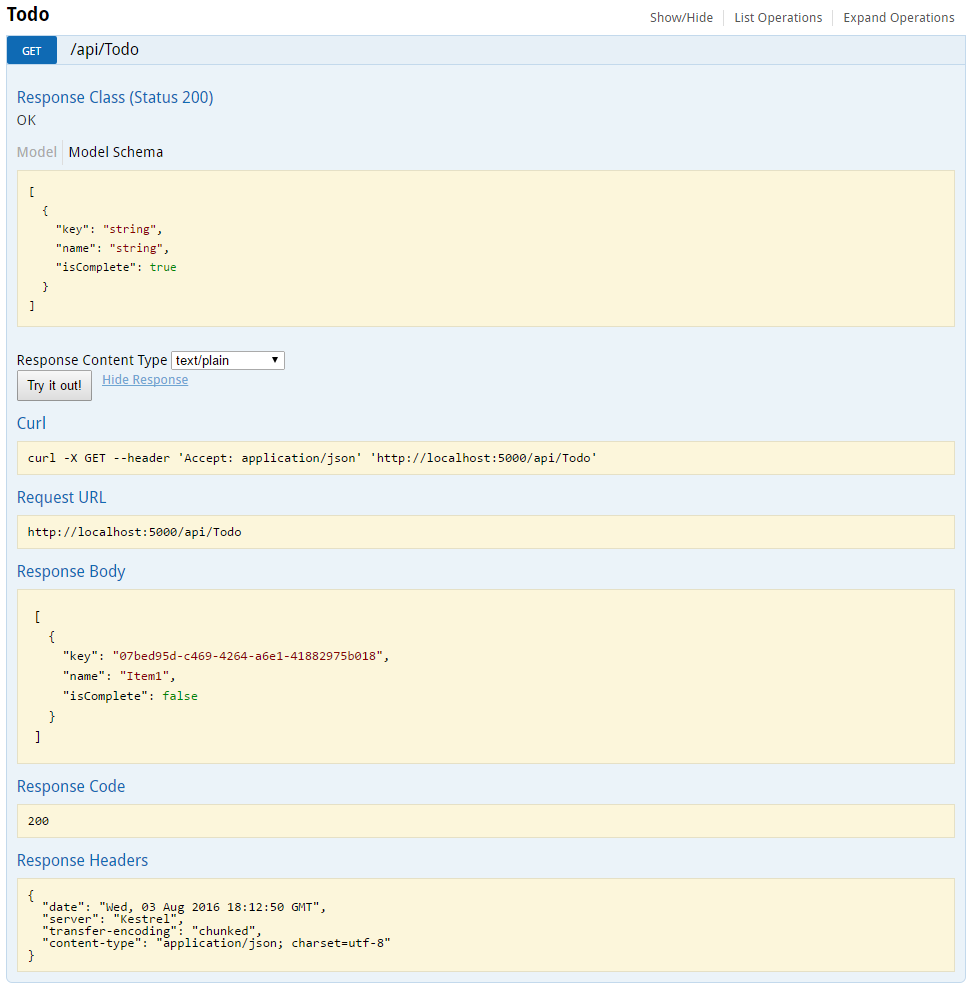
Best for generating interactive documentation directly from an OpenAPI Specification.
Swagger UI is an open-source tool that dynamically generates a user-friendly, interactive documentation web interface from an OpenAPI definition. It allows developers and end-users to visualize and interact with the API’s resources directly in the browser without needing access to the implementation logic.
Benefits / Key features:
Interactive UI: Automatically renders documentation from OpenAPI definitions, letting users test endpoints directly in their browser.
Simple Deployment: Deploys as a dependency-free, static HTML/CSS/JS asset collection, making it simple to host.
Customization: Provides powerful options for customizing the theme, layout, and even adding plugins to extend functionality.
OAS Compatibility: Supports OpenAPI Specification versions 2.0 and 3.0 for modern REST APIs.
Collaboration & automation features:
Code Generation: Integrates with Swagger Codegen to automate the creation of client SDKs and server stubs.
Source Control: API definition files can be version-controlled in Git alongside your API’s source code.
Integrations & API spec support:
Integrations: Natively integrates with the SwaggerHub platform and embeds into most development or documentation portals.
Specs: Primarily supports OpenAPI.
Pricing snapshot: Free and open-source, with commercial options available through the broader SwaggerHub platform.
Pros and cons:
Pros:
Simple setup and use
Automatically generated and interactive
Strong community support
Cons:
Limited to OpenAPI specs
Customization requires technical skill
Lacks advanced portal features
Summary / who it’s best for: It’s ideal for teams needing a fast, standardized way to produce and share interactive REST API documentation.
Swagger UI is a fully open-source tool.
Rating: 25k GitHub stars.
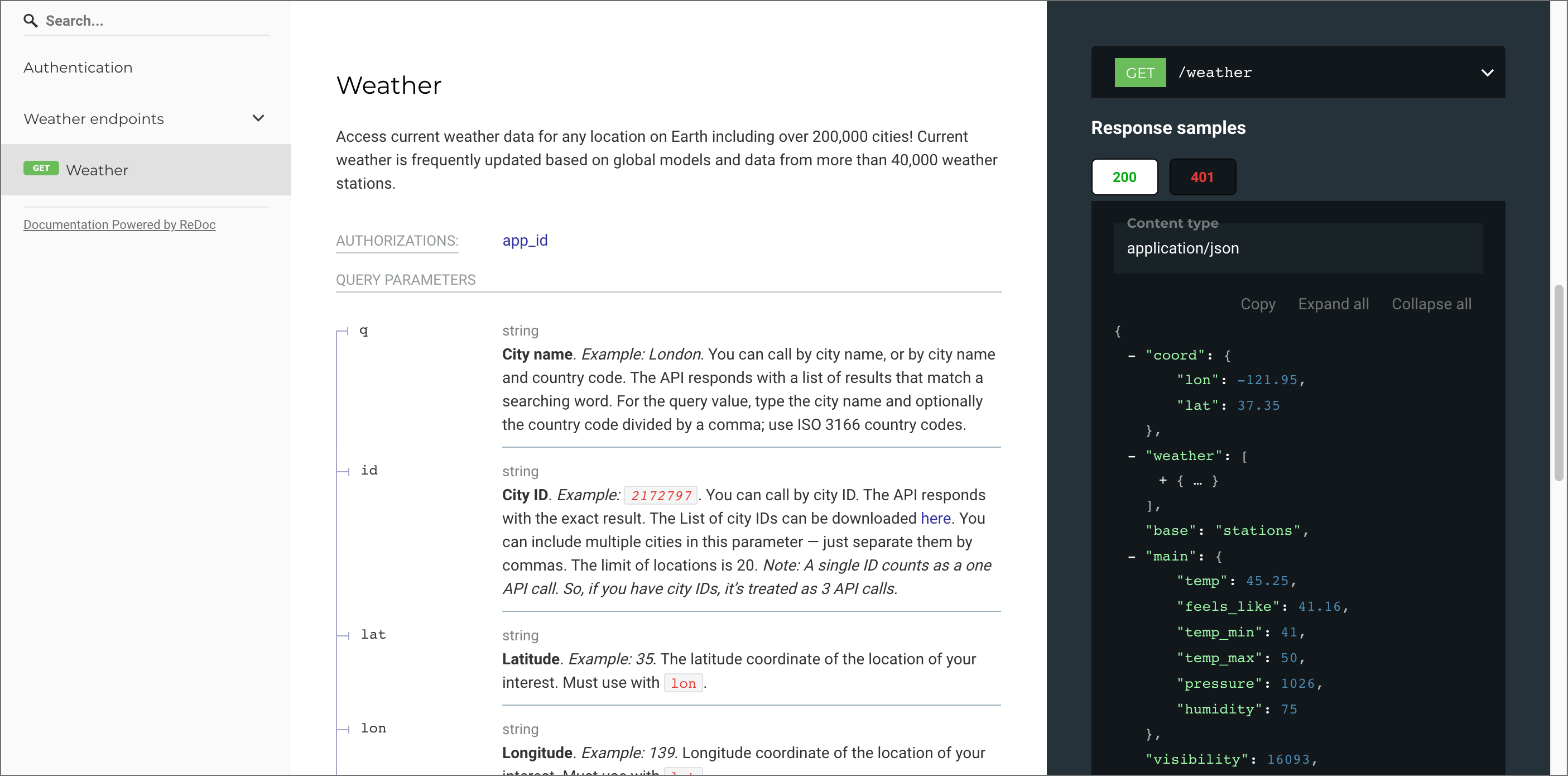
Best for: Generating modern, clean documentation from OpenAPI specifications.
ReDoc is a popular open-source tool that renders OpenAPI definitions into a responsive and clean three-panel documentation site. It’s ideal for teams who want to produce beautiful, interactive API reference docs with minimal effort directly from their existing specs.
Benefits / Key features:
Generates a responsive three-panel design with a search bar, navigation, documentation, and code samples.
Supports OpenAPI v3.1, v3.0, and Swagger v2.0 specifications.
Handles complex schemas with support for nested objects and discriminators.
Allows for basic UI theming and customization to align with brand identity.
Renders markdown from the OpenAPI description field for rich text formatting.
Automatically generates meaningful request and response payload examples from schemas.
Collaboration & automation features:
Integrates into CI/CD pipelines to automate documentation publishing.
Uses vendor extensions to support custom code samples.
Bundles multiple OpenAPI files into a single static HTML file.
Integrations & API spec support:
Integrations: Git, CI/CD tools via Redocly CLI.
Specs & styles: OpenAPI (Swagger).
Pricing snapshot: Free and open-source, with paid premium features and hosting available via Redocly.
Pros and cons:
Pros:
Excellent, modern out-of-the-box design.
Easy to deploy as a static site.
Strong open-source community support.
Cons:
No “Try it out” console (open-source).
Customization is more limited than competitors.
Advanced features require paid Redocly platform.
Summary / who it’s best for: Ideal for teams who need polished, readable, and easily deployed API reference docs generated from code.
Licensing/Ecosystem note: MIT-licensed open-source edition of commercial Redocly.

Best-for tagline: Best for managing the API lifecycle with a docs-as-code approach.
Redocly offers a comprehensive suite of tools for the entire API lifecycle, enabling teams to create branded developer portals from OpenAPI specifications. It focuses on a docs-as-code workflow, integrating with your Git repository to automate and streamline documentation updates for any team.
Benefits / Key features:
Generates a three-panel documentation layout with search, navigation, and code samples.
Offers an interactive “try-it” console and mock servers for API testing.
Provides robust API governance with linting and bundling to enforce standards.
Supports creating comprehensive developer portals with tutorials beyond the API reference.
Features advanced search, SEO-friendly outputs, and detailed usage analytics.
Highly customizable with options for theming and component ejection.
Collaboration & automation features:
Integrates with Git-based workflows (GitHub, GitLab, Bitbucket) for versioning and pull request previews.
Offers visual reviews and feedback mechanisms for collaborative editing.
Automates documentation deployment through CI/CD pipelines.
Integrations & API spec support:
Integrations: GitHub, GitLab, Bitbucket, Postman, and CI/CD tools.
Specs & styles: OpenAPI, GraphQL, AsyncAPI, and SOAP.
Pricing snapshot: A free 30-day trial is available, with paid plans starting at $10/user/month.
Pros and cons:
Pros:
Excellent docs-as-code workflow
Highly customizable and themeable
Supports a wide range of specs
Cons:
Advanced features are paid
Can be complex to set up
High price for large teams
Summary / who it’s best for: Redocly is ideal for organizations prioritizing a docs-as-code approach for creating customizable, comprehensive developer portals.
Licensing/Ecosystem note: Built on open-source Redoc with commercial extensions.

Rating: G2 rates API Hub for ease of use.
Best for tagline: Centralizing API design, documentation, and governance for teams.
SwaggerHub is a collaborative platform for the entire API lifecycle, from design to deployment. It provides a centralized environment built on the OpenAPI Specification to help teams enforce design standards, ensure quality, and accelerate development through its various automation and collaboration features.
Benefits / Key features:
Standardizes API design with style validation and reusable domains
Automatically generates interactive API documentation as you design
Offers a visual editor for both technical and non-technical users
Includes built-in mocking to simulate API endpoints before implementation
Provides robust version control to manage API evolution
Facilitates team collaboration with commenting and real-time feedback
Collaboration & automation features:
Enables simultaneous team editing, commenting, and change tracking
Role-based access control secures project and user management
Integrates with Git source control for version traceability
Generates client SDKs and server stubs
Integrations & API spec support:
Integrations: GitHub, GitLab, Bitbucket, Azure DevOps, AWS API Gateway, Apigee, and CI/CD webhooks
Specs & styles: OpenAPI (2.0, 3.0), AsyncAPI
Pricing snapshot: A free personal plan is available; paid team plans start at $75 per user/month.
Pros and cons:
Pros:
Strong design governance
Excellent team collaboration
Seamless Git integrations
Cons:
Limited documentation customization
Cloud-only deployment
No OpenAPI 3.1 support
Summary / who it’s best for: Ideal for organizations enforcing API design consistency and improving cross-team collaboration throughout the API lifecycle.
Licensing/Ecosystem note: A commercial product from SmartBear.

G2 Rating: 4.6 out of 5 stars
Best for creating interactive, user-friendly API developer hubs.
ReadMe is a hosted platform for creating and managing interactive API and developer documentation. It focuses on providing a superior developer experience by allowing users to make API calls directly from the docs and see real-time logs, making it ideal for teams that prioritize quick developer onboarding and engagement.
Benefits / Key features:
Automatically generate API reference documentation from OpenAPI/Swagger files.
Interactive “Try It” playground for making live API requests.
Personalized content, like pre-filled API keys, for logged-in users.
Customizable landing pages and markdown-based guides.
Comprehensive, Algolia-powered search across all documentation.
Built-in API changelog and discussion forums to keep users informed.
Collaboration & automation features:
“Suggested Edits” allow team members to propose and review changes.
Bi-directional sync with GitHub repositories keeps docs aligned with code.
Document versioning to manage different releases of your API.
Automate documentation updates via CLI and CI/CD integrations.
Integrations & API spec support:
Integrations: GitHub, Slack, Zendesk, Intercom, Segment, Google Analytics.
Specs & styles: OpenAPI (3.0, 3.1), Swagger (2.0), Postman Collections, GraphQL.
Pricing snapshot:
Offers a free plan with limitations; paid plans start at $99 per project/month.
Pros and cons:
Pros:
Excellent user experience with interactive elements.
Easy for non-technical team members to contribute.
Strong customization and branding options.
Cons:
Can be more expensive than alternatives.
Some users report limitations in search and reporting features.
Lacks content re-use functionality.
Summary / who it’s best for:
ReadMe is ideal for teams focused on API adoption and developer experience who need a polished, interactive hub without managing infrastructure.
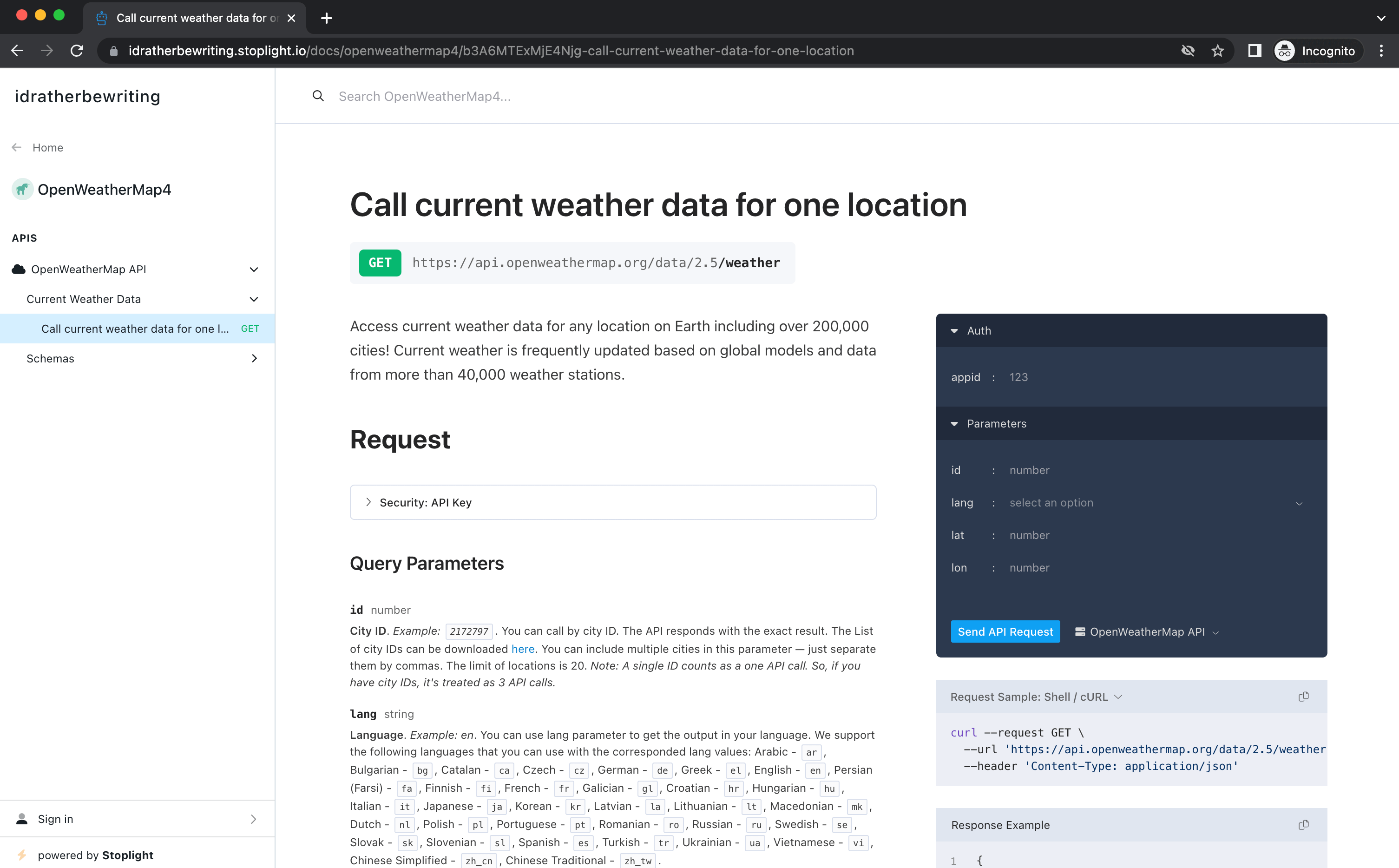
G2 Rating: 4.4 out of 5 stars.
Best for collaborative, design-first API development and documentation teams.
Stoplight is a collaborative API design and documentation platform that empowers teams to efficiently build, test, and manage high-quality APIs. It promotes a design-first approach, enabling both technical and non-technical stakeholders to contribute to the API lifecycle within a unified, intuitive interface.
Benefits / Key features:
Visual OpenAPI and JSON Schema editor simplifies API design.
Automatically generates interactive documentation with a try-it-out console.
Hosted mock servers powered by OpenAPI specs accelerate development.
Enforce design consistency with shareable style guides and linting.
Central repository for all API design assets and dependencies.
Create and publish markdown guides, tutorials, and reference documentation.
Collaboration & automation features:
Real-time collaborative editing and in-product discussions with annotations.
Git integration provides version control and seamless developer workflows.
Role-based permissions and guest access for secure stakeholder involvement.
CI/CD integration for automated validation and governance.
Integrations & API spec support:
Integrations: GitHub, GitLab, Bitbucket, Azure, Asana, Jira, Slack.
Specs & styles: OpenAPI (v2, v3), JSON Schema.
Pricing snapshot:
Offers a free plan for individuals; paid plans start at $41/month (billed annually).
Pros and cons:
Pros:
Intuitive, user-friendly interface.
Strong collaboration features.
Excellent for design-first workflows.
Cons:
Advanced features can be costly.
Limited customization options.
Lacks advanced lifecycle management.
Summary / who it’s best for:
Stoplight is ideal for organizations seeking to streamline API design and documentation through a collaborative, standards-driven, and user-friendly platform.
Licensing/Ecosystem note (optional):
Offers a mix of commercial plans and powerful open-source tools like Spectral and Prism.
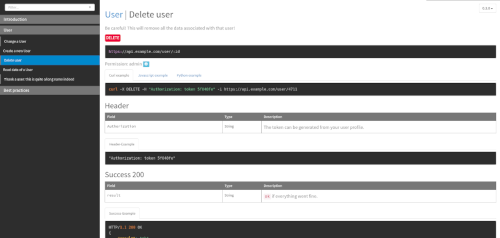
Best-for tagline: Code-first teams who need fast, simple, and free documentation generation.
apiDoc is a lightweight, open-source tool that generates static HTML documentation directly from annotations in your source code. It’s ideal for developers who want to keep documentation tightly coupled with the code and prefer a straightforward, annotation-based workflow without leaving their development environment.
Benefits / Key features:
Code-First Generation: Creates documentation from comments written directly in the source code.
Language Agnostic: Works with many programming languages that support comment blocks, including JavaScript, Java, PHP, and Python.
Customizable Templates: Offers the ability to create custom templates to alter the appearance of the generated documentation.
Versioning Support: Allows you to maintain and compare different versions of your API documentation.
Collaboration & automation features:
Basic Versioning: Tags API versions in the code to track changes.
CI/CD Integration: Can be integrated into CI/CD pipelines to ensure documentation is always up-to-date with code changes.
Integrations & API spec support:
Integrations: Offers plugins and build tools for Grunt, Webpack, and others; third-party converters for Swagger are available.
Specs & styles: Primarily for RESTful APIs; can generate OpenAPI specs through community plugins.
Pricing snapshot: Free and open-source under the MIT license.
Pros and cons:
Pros:
Simple and fast setup.
Free and open-source.
Keeps docs and code in sync.
Cons:
Lacks built-in testing or mocking.
Limited collaboration features for non-developers.
Can clutter source code with comments.
Summary / who it’s best for: It is best suited for individual developers or small teams needing a no-cost, code-centric tool for generating basic API documentation.
Licensing/Ecosystem note: apiDoc is a free, open-source tool.
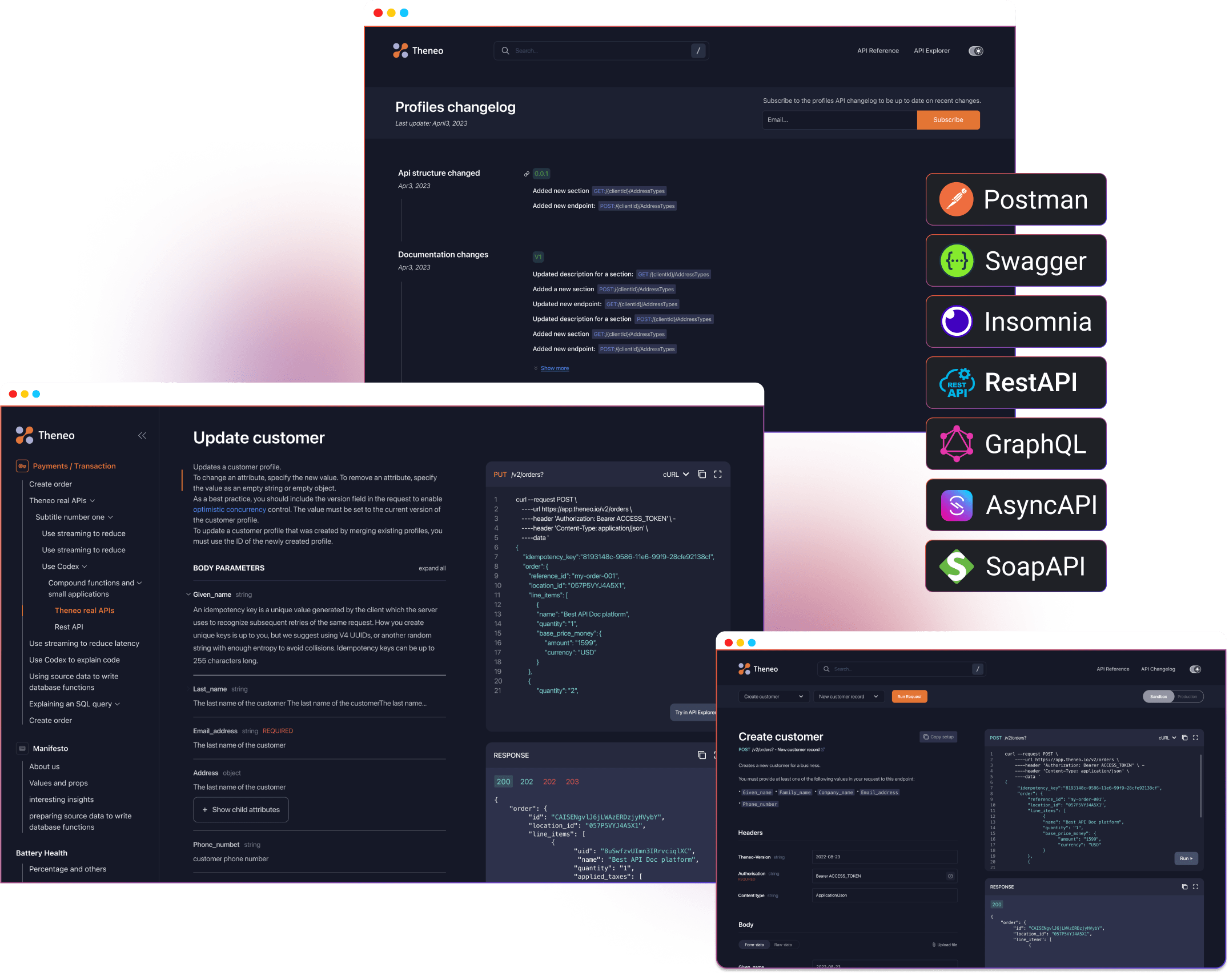
Best for teams seeking AI-powered documentation automation.
Theneo is an AI-driven platform that generates Stripe-like API documentation from a specification file. It’s for teams looking to automate creating user-friendly, interactive API docs, reducing the manual effort typically involved in the process and improving developer experience.
Benefits / Key features:
Automatically creates descriptions and summaries for your APIs.
Allows users to test API endpoints directly within the documentation.
Provides options to tailor documentation to match your brand identity.
Build stunning, centralized developer portals to engage users.
Features intelligent search to help users find information effectively.
Monitors API performance and generates analytics to understand usage.
Collaboration & automation features:
A Notion-like editor allows technical and non-technical teams to edit and comment live.
Integrates with Git to automatically update documentation whenever source code changes.
Automatically generates release notes.
Integrations & API spec support:
Integrations: GitHub, GitLab, Bitbucket, Postman, Visual Studio Code, and ChatGPT.
Specs & styles: OpenAPI (Swagger), AsyncAPI, SOAP, GraphQL, and gRPC.
Pricing snapshot:
Theneo offers a free plan, with paid plans starting at $120 per month.
Pros and cons:
Pros:
Significant time savings via AI.
Intuitive, user-friendly interface.
Supports modern API specifications.
Cons:
Learning curve for advanced features.
Pricing may be high for smaller teams.
Limited language support.
Summary / who it’s best for:
Theneo is ideal for teams producing high-quality, interactive API documentation with minimal manual effort.
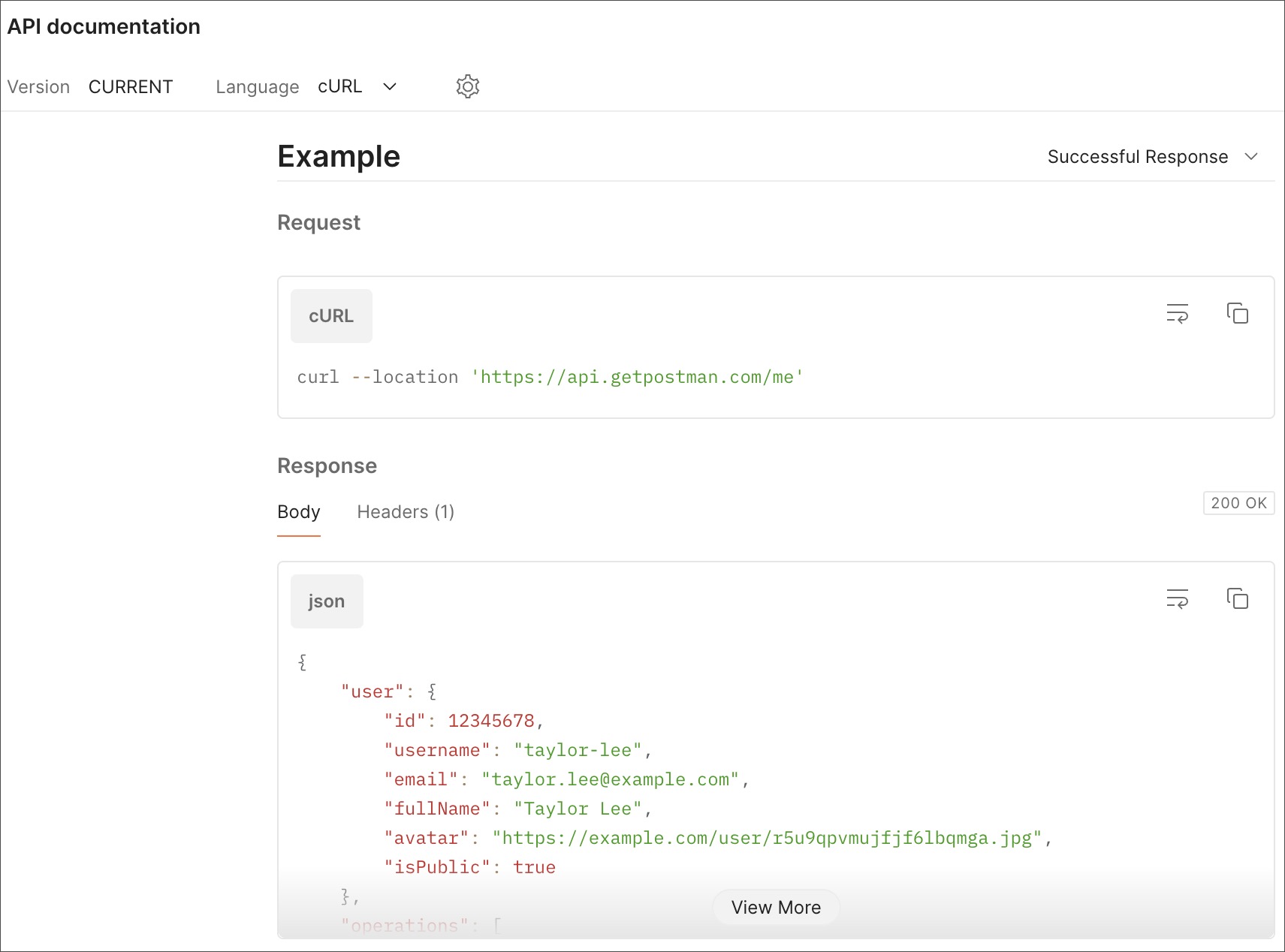
G2: 4.6 out of 5 stars.
Best for teams wanting an all-in-one API lifecycle platform.
Postman is an API platform for building and using APIs, simplifying the entire lifecycle. It streamlines collaboration by providing a central source of truth for all API assets, from documentation and testing to monitoring, enabling teams to create better APIs faster.
Benefits / Key features:
Automatically generate documentation from your API schema or collection.
Enhance documentation with examples, descriptions, and dynamic visualizations.
Publish public or private documentation with a single click.
Features a “Run in Postman” button for interactive documentation.
Mock servers allow for API simulation before production.
Provides robust tools for API testing, monitoring, and debugging.
Collaboration & automation features:
In-app commenting, forking, and pull requests for reviews.
Team workspaces for centralized API asset and project management.
Integrates with CI/CD pipelines for automated testing and documentation.
Integrations & API spec support:
Integrations: GitHub, GitLab, Bitbucket, Azure DevOps, AWS API Gateway.
Specs & styles: OpenAPI, RAML, GraphQL, gRPC, and SOAP.
Pricing snapshot: A free forever plan is available; paid plans start at $14 per user/month.
Pros and cons:
Pros:
Comprehensive, all-in-one toolset
Excellent collaboration features
Strong community and support
Cons:
Can be resource-intensive
UI can be overwhelming for new users
Advanced features require a paid plan
Its integrated toolchain is ideal for organizations standardizing their entire API development lifecycle on one platform.
Postman is a commercial platform forming its own extensive ecosystem.
If you have a public API, you want developers to find it. Search Engine Optimization (SEO) for your documentation is crucial for attracting new users. Quality API documentation tools improve SEO by providing:
Clean and Customizable URLs: Readable URLs help both users and search engines understand the page content.
Custom Metadata: The ability to set title tags and meta descriptions for each page is essential for search visibility.
Fast Load Times: Performance is a key ranking factor, and well built documentation sites are optimized for speed.
AI Agent Readiness: Modern tools are preparing for a future where AI agents discover and use APIs. Features like /llms.txt support help guide these agents, aligning with the vision of an “Agentic Experience”.
In 2025, treating your API documentation as a first class product is no longer optional. The rise of the API economy means that your developer experience is a key competitive advantage. Manual, static documentation is slow, error prone, and fails to meet the expectations of modern developers.
By investing in the right API documentation tools, you can automate tedious work, provide a world class interactive experience, and ensure your guides are always accurate and up to date. This not only makes developers happier but also accelerates your business goals by speeding up API adoption and reducing costly support overhead.
Ready to deliver API documentation your developers will love? Book a demo to see how Fern can automate your SDKs and docs.
An API documentation tool is a software solution that helps developers create, publish, and maintain documentation for an API. These tools often automate the process by generating interactive web pages directly from a machine readable specification file, like an OpenAPI definition.
Interactive documentation allows developers to make live API calls directly from the browser. This hands on approach helps them learn and experiment with the API much faster than reading static text, improving the overall developer experience and speeding up integration time.
Pricing varies widely. Some tools are open source and free, but may lack advanced features and support. Commercial SaaS products typically offer tiered pricing, from a few hundred dollars per month for basic plans to custom enterprise pricing for large teams needing features like advanced security, dedicated support, and SLAs.
Yes, some of the most powerful platforms offer a unified solution for both. Tools like Fern use a single API definition to generate not only beautiful documentation but also idiomatic, type safe SDKs in multiple programming languages, ensuring they always stay in sync.
The OpenAPI Specification (formerly known as Swagger) is the most widely adopted and industry standard format for describing RESTful APIs. Its large ecosystem and broad tool support make it the default choice for most development teams.


