Pexels stock image for "ReadMe alternative" - Photo by Pixabay on Pexels
Excellent API documentation is no longer a nice to have; it’s a core part of a product’s success. While ReadMe has been a go-to solution, many teams now seek a ReadMe alternative that better fits their workflow, budget, or technical needs. The best choice depends on your specific goals, but top contenders like Fern, Redocly, and Stoplight excel in key areas such as automated SDK generation, API governance, and design-first workflows. The market for API documentation tools is projected to grow from USD 1.38 billion in 2024 to USD 4.66 billion by 2033, showing a clear trend towards more sophisticated solutions. If you’re exploring your options, you’re in the right place.
ReadMe is a popular platform that allows companies to create beautiful, interactive, and user friendly API documentation. It’s known for features like an interactive API explorer, markdown based guides, and customizable branding. Many companies like Notion and Intercom use it to power their developer hubs. It provides a solid foundation for teams that need to get a documentation site up and running quickly without dedicating extensive engineering resources.
While ReadMe is a strong product, several common pain points lead teams to search for a ReadMe alternative.
A major challenge is keeping Software Development Kits (SDKs) and documentation perfectly in sync. Postman’s 2023 State of the API report found that 52% of developers consider lack of documentation the biggest obstacle to consuming APIs. When your SDKs are generated separately from your docs, any API change requires manual updates in at least two places. This disconnect often leads to outdated code snippets and frustrated developers. A unified platform that generates both SDKs and docs from a single source of truth, like an OpenAPI spec, eliminates this problem entirely.
Modern development teams live in their version control systems like Git. The “docs as code” approach, where documentation is managed with the same rigor as source code, has become a best practice. This methodology improves collaboration, ensures accuracy, and automates updates through CI/CD pipelines. Teams often look for a ReadMe alternative that offers a more robust CLI and seamless integration into their existing development lifecycle.
As APIs become more complex, so do documentation requirements. Teams may need better support for advanced features like complex authentication flows (OAuth 2.0), streaming with server sent events, or handling polymorphism. Open source tools or simpler platforms often lack built in support for these, forcing engineers to spend time building workarounds.
The rise of AI and large language models (LLMs) is creating a new consumer for APIs: AI agents. This requires a shift from just Developer Experience (DX) to Agentic Experience (AX). Companies are now seeking tools built for both humans and machines, a forward looking approach that ensures their APIs are ready for the future of software development. Solutions like Fern are designed with this dual experience in mind from the ground up.
When evaluating a new tool, it helps to have a clear set of criteria. Here’s what to look for in a modern ReadMe alternative.
Does the tool generate both client libraries and API reference documentation from a single specification? This is the most effective way to eliminate sync issues and save engineering time. For instance, Cohere was able to expand from one to four SDKs and generate a perfectly branded documentation site using this unified approach with Fern.
The ideal tool should treat your documentation as a core part of your codebase. Look for a strong CLI, GitHub integration, and the ability to trigger documentation builds and deployments as part of your existing CI/CD process. This fosters a culture where developers and writers can collaborate effectively on documentation.
For growing companies, enterprise readiness is key. This includes features like robust security, role based access control (RBAC), and dedicated support with service level agreements (SLAs). You need a partner that can scale with you and provide expert help when you need it.
Your documentation is an extension of your brand. A quality ReadMe alternative should offer deep customization, not just for logos and colors but for the entire layout and user experience. The ability to use custom CSS, JavaScript, and even your own React components is a significant advantage for creating a unique and on brand developer portal.
Consider whether the platform is built for the future. Does it support initiatives like /llms.txt to help AI agents understand and consume your API? Choosing a platform with a vision for Agentic Experience ensures your API remains relevant and accessible to the next generation of consumers.
The landscape of API documentation tools is diverse. They generally fall into a few categories:
All in One Platforms: These tools, such as Fern, provide a comprehensive solution for both SDK and documentation generation, often with hosting and enterprise support included. They are designed to be a complete developer experience platform.
Hosted Documentation Services: This category, where ReadMe sits, focuses primarily on creating and hosting beautiful documentation sites.
Open Source Generators: Tools like Redoc and Swagger UI are popular for rendering OpenAPI specifications. They offer great flexibility but often require more manual setup, maintenance, and lack built in support for advanced features and enterprise needs.
Static Site Generators: Frameworks like Docusaurus or MkDocs can be adapted for documentation. They provide maximum control over the final output but require the most engineering effort to build and maintain.
While ReadMe is a popular choice for creating API documentation and developer hubs, it’s far from the only option on the market. Depending on your team’s specific needs, budget, and desired workflow, a different tool might be a much better fit. In this section, we’ll explore ten of the best ReadMe alternatives, each offering a unique set of features and strengths, from open-source static site generators to comprehensive API lifecycle management platforms.
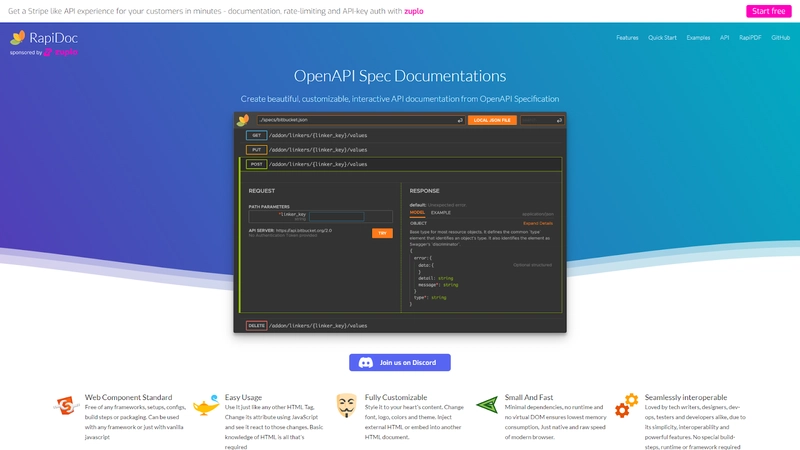
Fern is an open-source toolkit for generating SDKs and API documentation from an API definition. It’s designed for developers who want to automate client library creation and maintain high-quality, interactive documentation, positioning it as a more code-centric alternative to ReadMe.
Top features:
SDK Generation: Automatically creates SDKs in multiple languages like TypeScript, Python, and Java. This ensures client libraries are always in sync with the API specification.
API Documentation: Generates beautiful, interactive documentation that includes code snippets and real-time API request examples.
OpenAPI Support: Works seamlessly with existing OpenAPI/Swagger specifications, allowing for gradual adoption without a full rewrite.
GitHub Integration: Natively integrates with GitHub for version control and automated workflows.
How it’s better than ReadMe: Stronger for developers due to its open-source nature and robust, automated SDK generation capabilities.
Pricing summary: Open-source and free, with an optional managed cloud service available.
Caveats/limitations: Requires more developer involvement and setup compared to fully managed SaaS solutions.
Ideal for: API-first teams wanting to automate SDKs and documentation together.

Redocly is an API documentation platform for teams needing strong governance and docs-as-code workflows. Built around OpenAPI, it excels at generating interactive API reference documentation and managing the entire API lifecycle from a central registry.
Top features:
Automated Reference Docs. Instantly generates beautiful, responsive, and SEO-friendly API documentation from OpenAPI specifications.
Developer Portals. Launch customizable portals that combine API references with tutorials and guides for a complete hub.
API Governance. Use a central registry and scorecards to validate, lint, and enforce API style consistency.
Docs-as-Code Workflow. Integrates with Git providers to automate documentation deployment and add previews to pull requests.
Interactive Console. Lets developers make live API requests directly within the documentation.
How it’s better than ReadMe: It offers deeper OpenAPI support, robust governance features, and a true docs-as-code workflow.
Pricing summary: Pro plan starts at $10/seat/month; Enterprise plans are quote-based.
Caveats/limitations: May have a steeper learning curve and more limited visual customization options.
Ideal for: API-first companies needing strong governance and automated, spec-driven workflows.
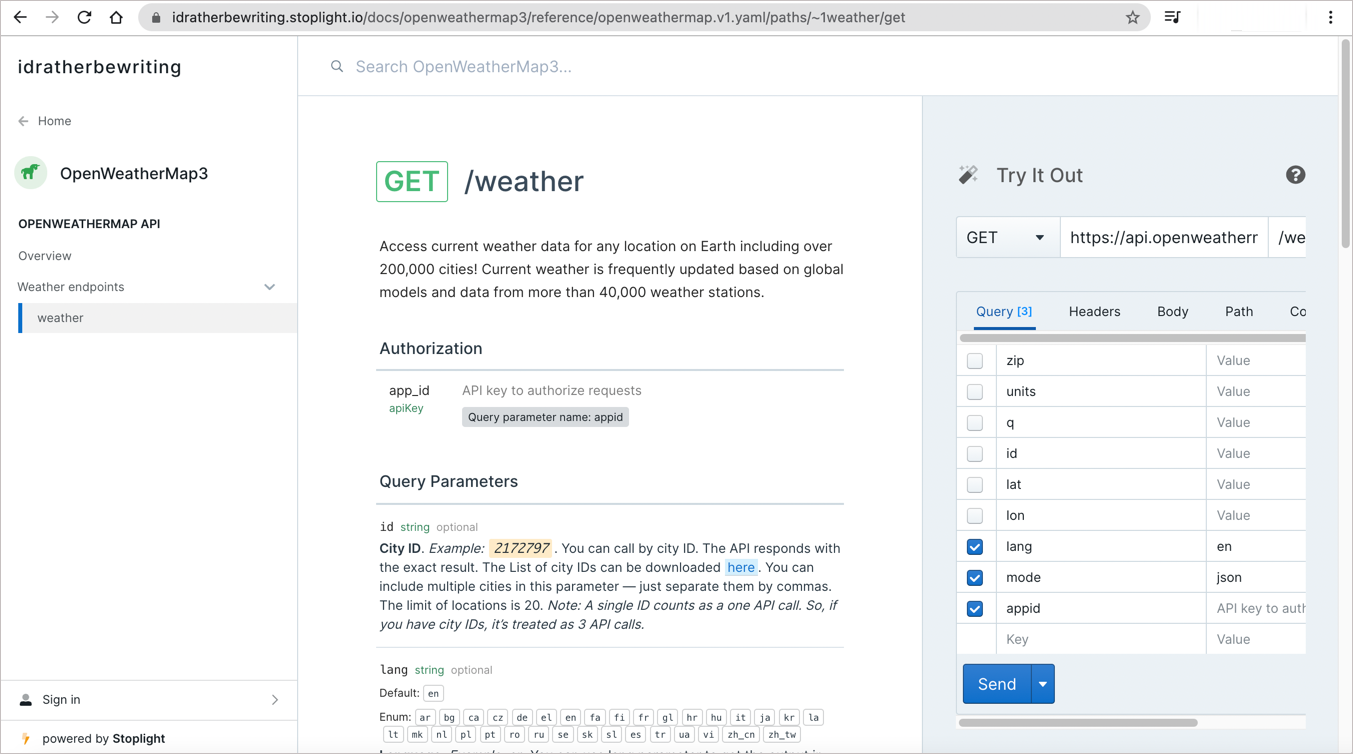
Stoplight is a design-first API platform for the entire lifecycle. It’s for teams wanting to design, mock, test, and document APIs in one place, differing from ReadMe’s primary focus on documentation and developer experience portals by integrating the full workflow.
Top features:
Visual API Designer: An intuitive editor for creating and modifying OpenAPI specifications without requiring deep technical knowledge of the format.
Automatic Mocking: Instantly generates mock servers directly from API designs, enabling parallel development and faster testing cycles for all teams.
Powerful Governance: Enforce API standards and consistency across your organization using shareable style guides and automated validation tools to ensure quality.
Collaborative Hub: Provides a version-controlled source of truth for all API assets.
How it’s better than ReadMe: Stronger focus on the complete API lifecycle, especially collaborative design, governance, and versioning.
Pricing summary: Offers a free tier; paid plans start at $99 per month.
Caveats/limitations: Has a steeper learning curve than pure documentation-focused tools.
Ideal for: API-first teams needing strong governance and design collaboration features.
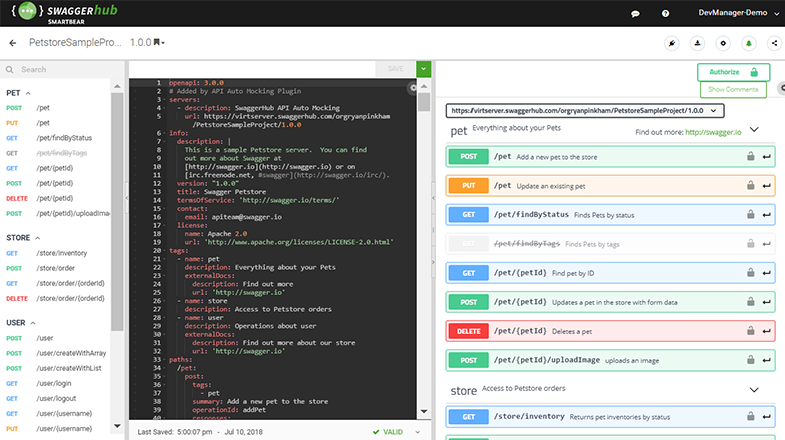
SwaggerHub is a collaborative platform for designing, building, and documenting APIs with the OpenAPI Specification. It centralizes the entire API lifecycle, from design to deployment. Unlike ReadMe, its focus is on a design-first approach within an integrated development environment.
Top features:
Integrated API Design: Use a powerful editor with smart feedback to design and build consistent APIs with the OpenAPI Specification.
Centralized Collaboration: Allow teams to work together on API specifications using built-in version control, commenting, and reusable domains.
Interactive Documentation: Automatically generate interactive API documentation that is easy for developers to navigate, test, and integrate with.
Code Generation: Speed up development by automatically generating server stubs and client SDKs in dozens of popular languages.
How it’s better than ReadMe: Offers a more robust, integrated solution for the entire API lifecycle, emphasizing design-first principles and governance.
Pricing summary: Free personal plans available; team plans start at $75 per month.
Caveats/limitations: The user interface can be complex, and the free plan is limited.
Ideal for: Teams needing a centralized platform for API design and governance.
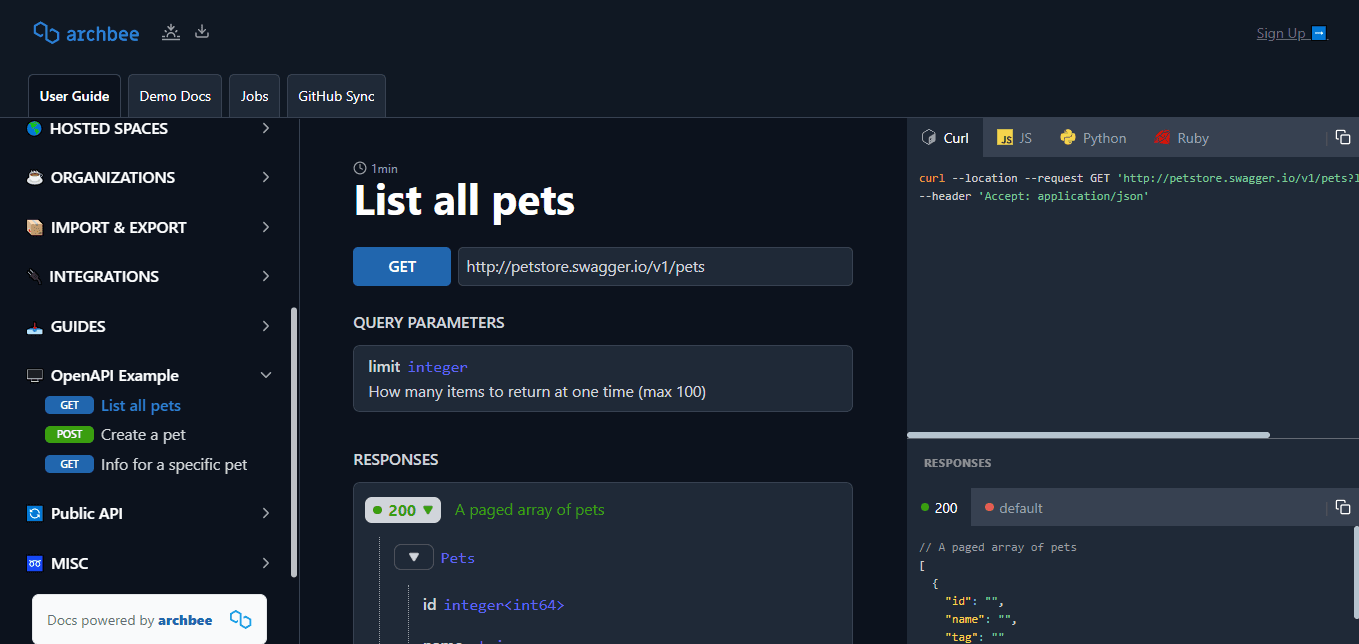
Archbee is a comprehensive documentation platform that unifies internal and external knowledge for technical teams. It offers a more integrated workspace than ReadMe, ideal for creating team wikis, public developer hubs, and complete API documentation within a single tool.
Top features:
Automated API Docs. Generate and maintain accurate API references directly from OpenAPI or GraphQL schemas, eliminating manual developer updates.
Collaborative Editing. Allow multiple users to edit documents simultaneously in real-time, streamlining content creation and ensuring consistency.
Rich Content Blocks. Enhance documents with over 30 custom blocks, including diagrams, changelogs, and interactive API reference sections.
AI-Powered Search. Provide users with instant answers through an AI-driven search that pulls information directly from your existing documentation.
How it’s better than ReadMe: Offers greater branding control and a more intuitive, collaborative editor for diverse documentation types.
Pricing summary: No free plan is available; paid plans start at $50/month with a trial.
Caveats/limitations: The platform can have a slight learning curve, and storage limits apply.
Ideal for: Teams needing a unified platform for internal and external documentation.
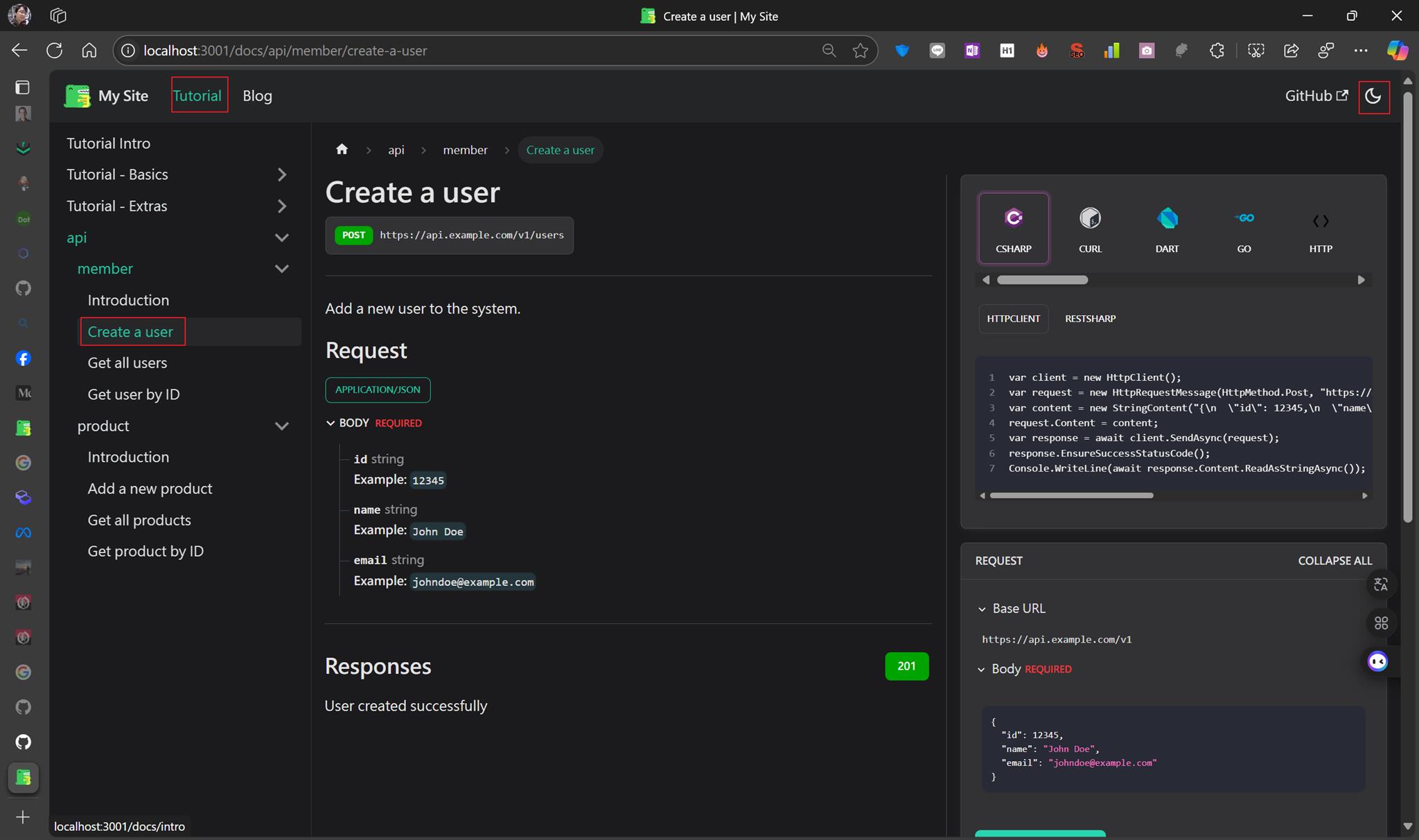
Docusaurus is an open-source static site generator for building documentation websites, especially for software projects. It’s developer-oriented, allowing teams to manage documentation like code and is ideal for those wanting a customizable, self-hosted solution built with React.
Top features:
MDX-powered: Write interactive components using JSX and React directly within Markdown files.
Versioning: Keep documentation in sync with project releases, supporting users on all versions.
Theming & customization: Offers extensive control over your site’s appearance and functionality through customizable themes.
Localization: Built-in internationalization support makes it easy to translate your site into multiple languages.
Search functionality: Comes with built-in search, and proudly supports Algolia for robust documentation search.
How it’s better than ReadMe: Greater customization, full ownership of the site, and a docs-as-code workflow that deeply integrates with development processes.
Pricing summary: Free and open-source, with no licensing fees or premium tiers.
Caveats/limitations: Requires some development resources and knowledge of React for significant customization.
Ideal for: Teams that want to manage documentation as code.
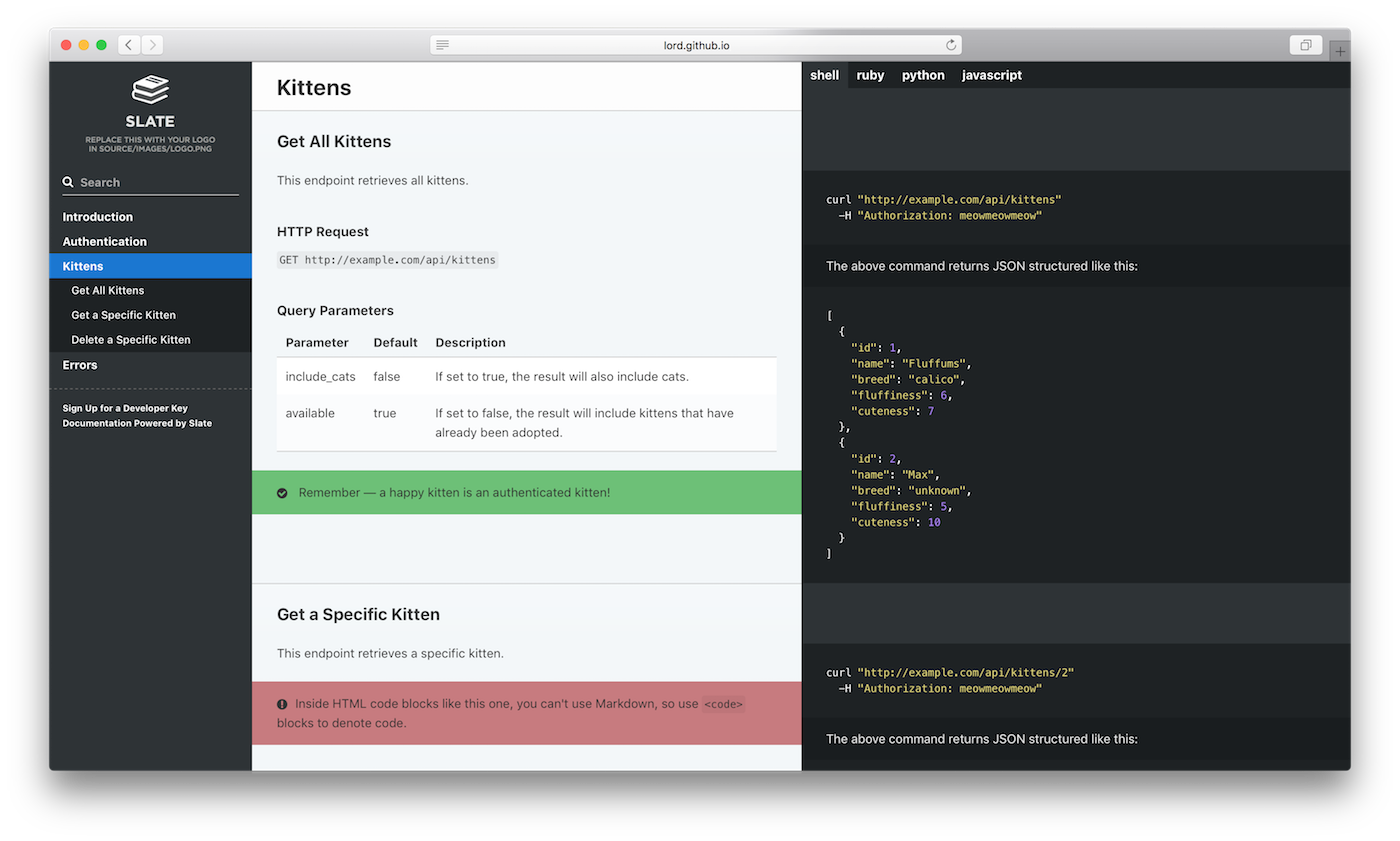
Inspired by Stripe, Slate is an open-source tool that generates beautiful, responsive, single-page API documentation from Markdown. It’s for developers who value simplicity and control, offering a clean, static alternative to managed platforms like ReadMe for creating user-friendly documentation.
Top features:
Intuitive design: A clean, three-panel layout keeps your API descriptions on the left and corresponding code samples on the right.
Markdown-first authoring: Write and edit all of your documentation directly in Markdown, making the entire process straightforward and version-control friendly.
Multi-language examples: Include tabbed code samples for numerous programming languages, with out-of-the-box syntax highlighting for over 100 languages.
Open-source and customizable: Host documentation for free on your own server or GitHub Pages and freely customize its appearance.
How it’s better than ReadMe: Slate is completely free and provides total control over hosting, unlike ReadMe’s managed, subscription-based service.
Pricing summary: Free and open-source.
Caveats/limitations: Requires developer effort to set up and maintain; lacks built-in analytics.
Ideal for: Teams wanting a simple, free, and self-hosted documentation site.
MkDocs is a fast static site generator for building project documentation with Markdown. It’s for developers who prioritize speed and simplicity, allowing them to maintain documentation alongside code and host it anywhere, offering a more code-centric workflow versus ReadMe.
Top features:
Fast & Simple: Set up projects in minutes and write documentation using plain Markdown.
Live Preview: A built-in dev server automatically reloads your browser whenever you save your changes.
Customizable Themes: Use built-in themes or highly customizable third-party options to match your brand.
Extensible with Plugins: Add functionality like search, PDF export, and blog support with community plugins.
Host Anywhere: Build static HTML files to host on GitHub Pages or any web server.
How it’s better than ReadMe: Stronger customization through themes and plugins, no platform lock-in, and a code-centric workflow.
Pricing summary: Completely free and open-source software with no associated costs.
Caveats/limitations: Requires Python knowledge and familiarity with the command line for setup.
Ideal for: Teams wanting a simple, fast, and customizable documentation solution.
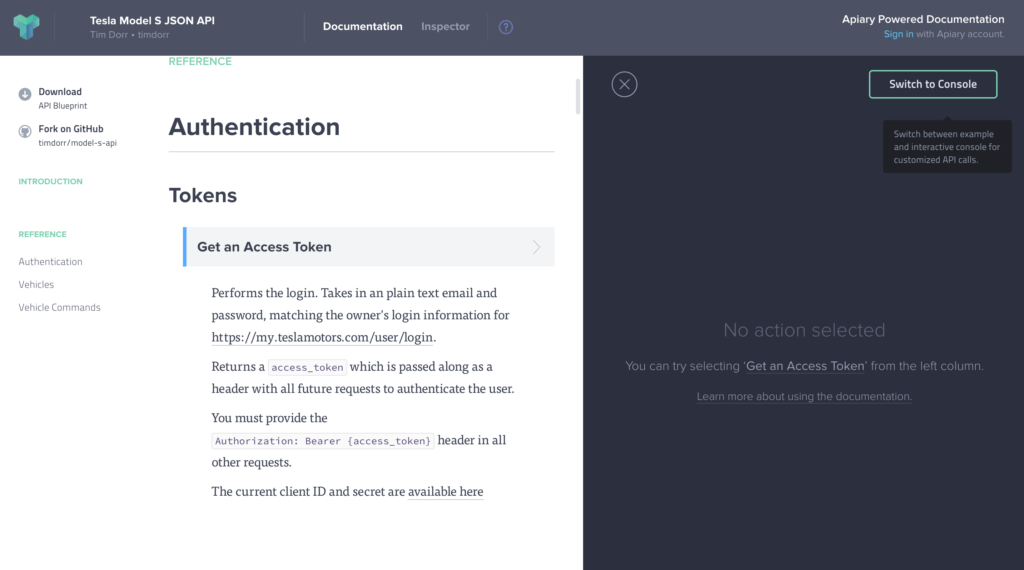
Acquired by Oracle, Apiary is a platform for design-first API development, documentation, and testing. It’s geared toward teams who collaboratively create APIs using the API Blueprint language before writing code, ensuring design and documentation are always synchronized.
Top features:
API Blueprint. Design APIs with a powerful, human-readable language that serves as your single source of truth.
Mock Server. Automatically generate a mock server from your API design, allowing frontend and backend teams to work concurrently.
Interactive Documentation. Documentation is auto-generated from the API Blueprint, guaranteeing it’s always aligned with the specification.
Governance. Enforce design standards and rules across all APIs, ensuring consistency and quality throughout the organization.
How it’s better than ReadMe: It offers stronger design-first tooling with integrated mocking and a greater focus on collaborative API lifecycle management.
Pricing summary: Offers a free tier; enterprise pricing is quote-based via Oracle Cloud.
Caveats/limitations: Customization options are limited and it’s deeply integrated into the Oracle ecosystem.
Ideal for: Teams practicing design-first API development needing strong governance tools.
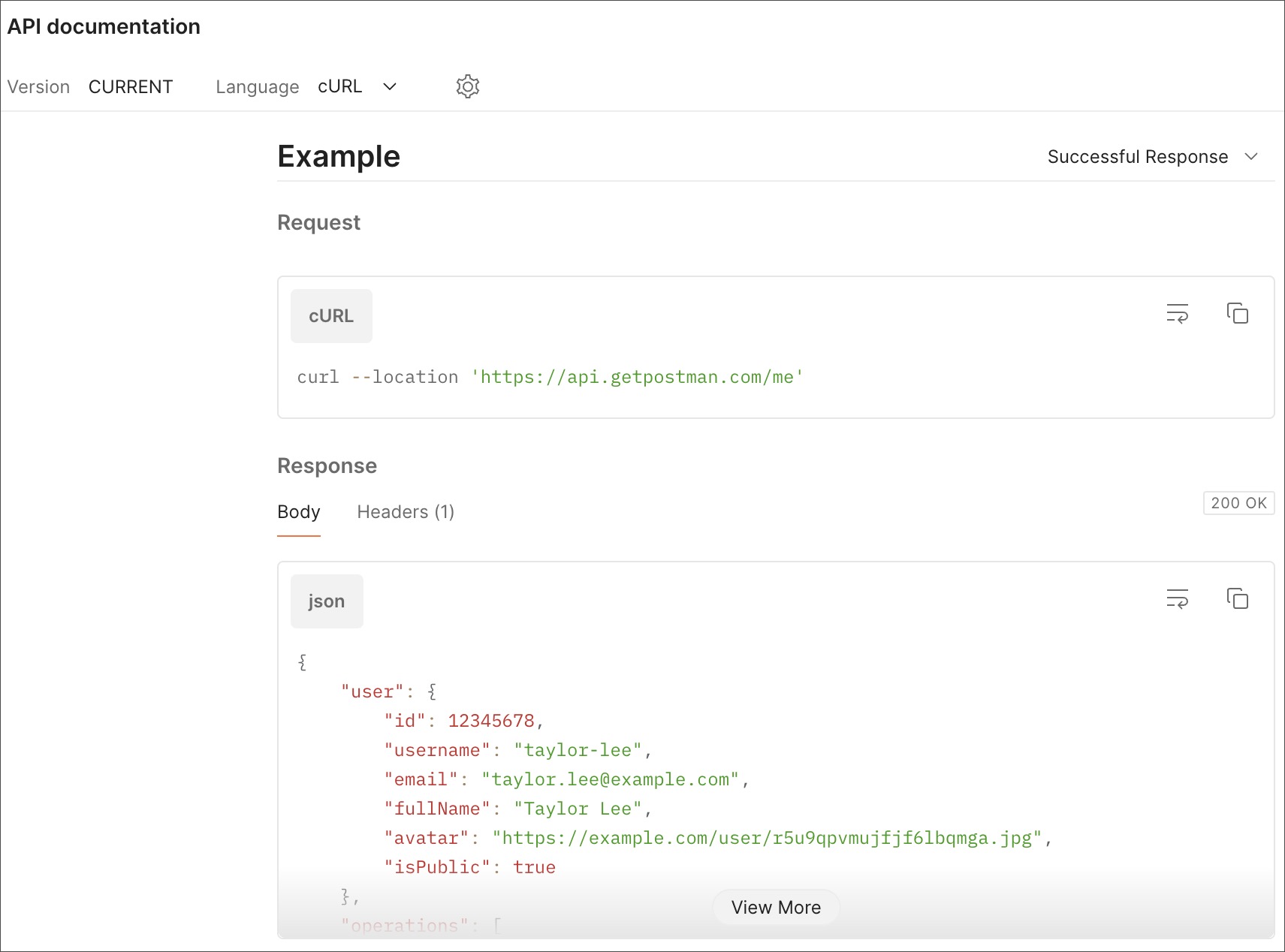
Postman is a comprehensive API platform for the entire API lifecycle. It gives developers a unified environment for designing, building, testing, and iterating on APIs, moving beyond basic documentation into hands-on development, testing, and extensive team collaboration.
Top features:
API Client: Send REST, SOAP, and GraphQL requests to validate and explore API behavior directly within the application.
Automated Testing: Create test suites with JavaScript to automate functional, integration, and regression testing in your CI/CD pipeline.
API Documentation: Automatically generate machine-readable documentation from collections, ensuring it stays updated as the API evolves.
Mock Servers: Simulate API endpoints, allowing front-end and back-end teams to work in parallel.
Collaboration Tools: Use shared workspaces and version control for efficient teamwork.
How it’s better than ReadMe: Excels with its integrated toolset for the entire API lifecycle, not just documentation.
Pricing summary: Free plan available; paid plans start at $14 per user/month.
Caveats/limitations: The application can be resource-heavy; many collaboration features require a paid plan.
Ideal for: Development teams needing one platform for the complete API lifecycle.
Switching your documentation platform requires a thoughtful plan. Follow this checklist for a smooth transition.
Define Your Core Needs: Use the evaluation criteria above to create a scorecard. What are your must have features? Where are your biggest pain points with your current solution?
Shortlist 2 to 3 Candidates: Based on your needs, select a few tools for a deeper evaluation.
Run a Proof of Concept (PoC): Test each tool with a representative sample of your API. Generate a documentation site and, if applicable, an SDK.
Assess the Developer Experience: How easy is it for your engineers to integrate the tool into their workflow? Is the CLI intuitive? Does it automate tedious tasks?
Plan Content Migration: Determine how you will move your existing guides, tutorials, and other markdown based content. Ask potential vendors if they offer migration support. For example, Fern offers white glove migration services for enterprise clients.
Integrate with CI/CD: Set up your build pipeline to automatically generate and deploy documentation updates whenever your API changes. Automation is key to maintaining accuracy.
Announce the New Docs: Once you’re ready, communicate the change to your internal teams and external developer community.
Choosing a ReadMe alternative is about more than just finding a different feature set. It’s an opportunity to fundamentally improve your developer experience, streamline your workflows, and prepare your APIs for a future where they will be consumed by both humans and AI agents. By focusing on a unified approach to SDKs and docs, embracing a docs as code culture, and prioritizing enterprise readiness, you can deliver a developer hub that you’re truly proud of.
Ready to see how a unified SDK and docs platform can transform your developer experience? Explore Fern’s open source tools today.
For teams that need to generate both SDKs and documentation, a unified platform like Fern is the ideal ReadMe alternative. It ensures your client libraries and API docs are always in sync because they are generated from the same API specification.
Yes, there are popular open source tools like Swagger UI and Redoc that are excellent for rendering API reference documentation from an OpenAPI file. However, they typically require more setup and may lack the comprehensive feature set, hosting, and enterprise support of a managed platform.
Pricing varies widely. Open source tools are free to use but have maintenance and hosting costs. SaaS platforms can range from a few hundred to several thousand dollars per month, depending on features, usage, and support levels.
docs as code workflow important for a documentation tool?A docs as code approach treats documentation files like source code, storing them in Git and managing changes through pull requests. This improves collaboration between developers and writers, enables automated testing and deployment, and ensures documentation is always up to date with the product itself.
Yes, most documentation platforms support importing content from Markdown files, which you can typically export from ReadMe. Some providers, including Fern, offer dedicated migration support and services to make the process as seamless as possible for enterprise teams.


